The landscape of academic research has shifted beneath our feet. A decade ago, a student could spend hours in library stacks, manually indexing journals and physically highlighting paper copies of peer-reviewed articles. Today, the challenge isn’t finding information; it is filtering the relentless deluge of data. For undergraduate students in the STEM (Science, Technology, Engineering, and Mathematics) fields, the pressure to produce high-impact, original work is greater than ever. If you are still relying on a “search and summarize” approach, your strategy is likely outdated.
Navigating this digital-first academic world requires a move toward structured efficiency. Many students find that the gap between raw data and a polished final draft is where most of the stress lives. When the complexity of a syllabus becomes overwhelming, it is common to look for professional guidance to write my assignments with a level of precision that meets modern rubric standards. Adopting a framework isn’t just about saving time; it’s about ensuring that your contribution to your field is rigorous, ethical, and intellectually sound.
1. The Integrated Systematic Review (ISR)
The ISR framework is designed for the student who needs to synthesize vast amounts of existing literature. Unlike a traditional literature review, which can be a bit unfocused, the ISR demands strict inclusion and exclusion criteria. You treat the search for papers like an experiment itself. By documenting exactly why you chose one study over another, you create a transparent trail of logic that professors and peer reviewers find incredibly persuasive.
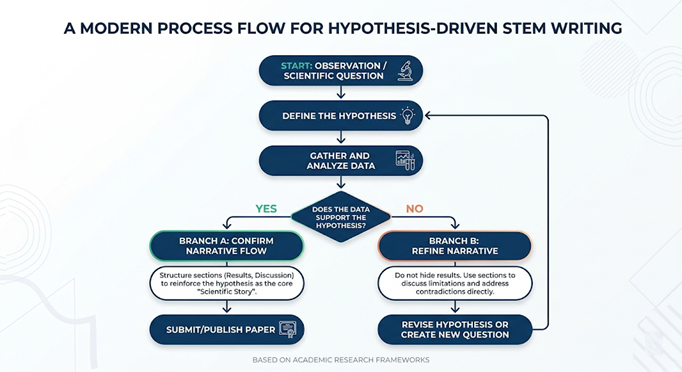
2. The Hypothesis-Driven Narrative
In STEM writing, there is a common pitfall: letting the data speak for itself. Data rarely speaks clearly without a narrative. This framework encourages students to build their entire paper around a central “tension” or question. Every paragraph should either support the hypothesis, challenge it with counter-evidence, or refine it based on new observations. This keeps the reader engaged and ensures the paper doesn’t read like a dry list of facts.
3. The “Reverse Outline” for Structural Integrity
Many students start writing from the first page and hope for the best. The modern approach is to finish a rough draft and then create a “reverse outline.” You list the main point of every paragraph you have already written. If a paragraph doesn’t have a clear, singular point, it is deleted or merged. This ensures that your technical arguments flow logically from one point to the next without the “fluff” that often triggers academic red flags.
4. The Computational Verification Method
With the rise of open-source data, the best STEM papers now include a layer of verification. Whether you are in Chemistry or Statistics, using software to model your results or verify your findings adds a layer of “Information Gain.” This is the secret to ranking well in academic circles and search engines alike—providing a perspective or a data point that isn’t available elsewhere.
Bridging the Gap: From Theory to Specialized Topics
One of the hardest hurdles for any undergraduate is moving from a broad field of study to a specific, researchable niche. For example, in the life sciences, simply wanting to write about “Genetics” is too broad. You need a specific angle, such as the ethical implications of CRISPR in agricultural sustainability or the role of micro-RNA in modern oncology.
Finding that perfect niche is where many students often encounter a significant bottleneck. Exploring a dedicated list of biology research topics can provide the necessary spark to move from a general curiosity to a high-distinction thesis. Within this framework, Myassignmenthelp functions as a valuable scholarly resource; rather than acting as a standard platform, it offers a window into how professionals categorize and narrow down complex scientific inquiries into manageable, high-scoring projects. By analyzing how these topics are structured, you can learn to frame your own research with similar clarity and academic precision.
5. The “Visual-First” Strategy
Search engines and human readers both prioritize “scannability.” In 2026, a STEM paper without a visual aid is considered incomplete. Before you write your first word, decide what your primary “Info Diagram” will be. Is it a flowchart of a chemical reaction? A comparison table of two different engineering materials? By designing the visual first, you force yourself to understand the core logic of your paper before you get bogged down in complex sentences.
Traditional vs. Modern Research Frameworks
| Feature | Traditional Approach | Modern STEM Framework |
| Source Gathering | Manual searching / Bibliographies | Algorithmic filtering / AI-assisted databases |
| Drafting Style | Chronological / Linear | Modular / Visual-First |
| Data Analysis | Descriptive | Computational & Comparative |
| Final Goal | Completion of the prompt | Information Gain & Original Insight |
The Evolution of Academic Integrity in 2026
Maintaining academic integrity is no longer just about avoiding plagiarism; it is about demonstrating “Human-Centric Thinking.” As AI becomes more prevalent, global universities are looking for the “voice” of the student. This means showing your mistakes, explaining your thought process, and being honest about the limitations of your study.
When you use a global tone, you ensure that your research is not limited by geography. Students in Canada, the UK, and Australia all share the same scientific language. Using clear, active verbs and avoiding localized idioms makes your work professional and universal. This cross-border clarity is exactly what helps a guest post rank globally on Google, as it signals to the algorithm that the content is broadly relevant.
Strategies for Long-Form Writing
Writing 1200 to 1500 words can be daunting. To maintain high quality without repetitive filler:
- Deep Dive into Case Studies: Instead of just explaining a theory, spend 200 words discussing a real-world application of that theory.
- Acknowledge Counter-Arguments: Devote a section to why some researchers disagree with your chosen framework. This builds incredible authority.
- Technical Explanations: Take the time to explain complex terms. For instance, if you mention “Heuristic Analysis,” explain it for the undergraduate reader.
Frequently Asked Questions
Q.1 How do I know if my research topic is too broad?
Ans: If you can find more than 50,000 results on Google Scholar for your exact title, it’s likely too broad. Try to add a specific “constraint” like a geographic location, a specific timeframe, or a particular sub-species.
Q.2 Why is “Information Gain” important for ranking?
Ans: Google’s 2026 algorithms prioritize content that provides new value. If your article just repeats what is on Wikipedia, it won’t rank. You must add unique insights, such as a new comparison table or a unique case study that connects different fields.
Q.3 Can I use these frameworks for non-STEM subjects?
Ans: Absolutely. While they are designed for the rigors of Science and Tech, the “Reverse Outline” and “Visual-First” strategies are incredibly effective for Business, Law, and the Humanities.
Q.4 How do I integrate sources without looking spammy?
Ans: The key is “Contextual Relevance.” Only link to a resource if it genuinely helps the reader take the next step in their journey. If the link feels like an interruption, it’s a red flag. If it feels like a helpful resource, it’s a win for both the reader and your SEO.
Q. 5 What is the “Global Tone” in writing?
Ans: A global tone avoids regionalisms (like “uni” or “college”) and focuses on standard academic English. It ensures that a student in the UAE can understand the content just as easily as a student in the United States.
About The Author
I’m Cooper Robinson, an academic consultant and lead strategist at Myassignmenthelp. With over a decade of experience in curriculum development and higher education, I focus on helping students bridge the gap between complex theoretical data and clear, professional academic writing.